
The Warning They Would Not Hear
Transcript
Written by Tim Estes
You can:
- DOWNLOAD offline on your computer/tablet/phone as a PDF file and read it anytime, OR
- Use the CONTACT LINK above (under Services) to request your collection be sent to you via USPS. This will REQUIRE you to include your mailing address (U.S. only).
The Warning They Would Not Hear
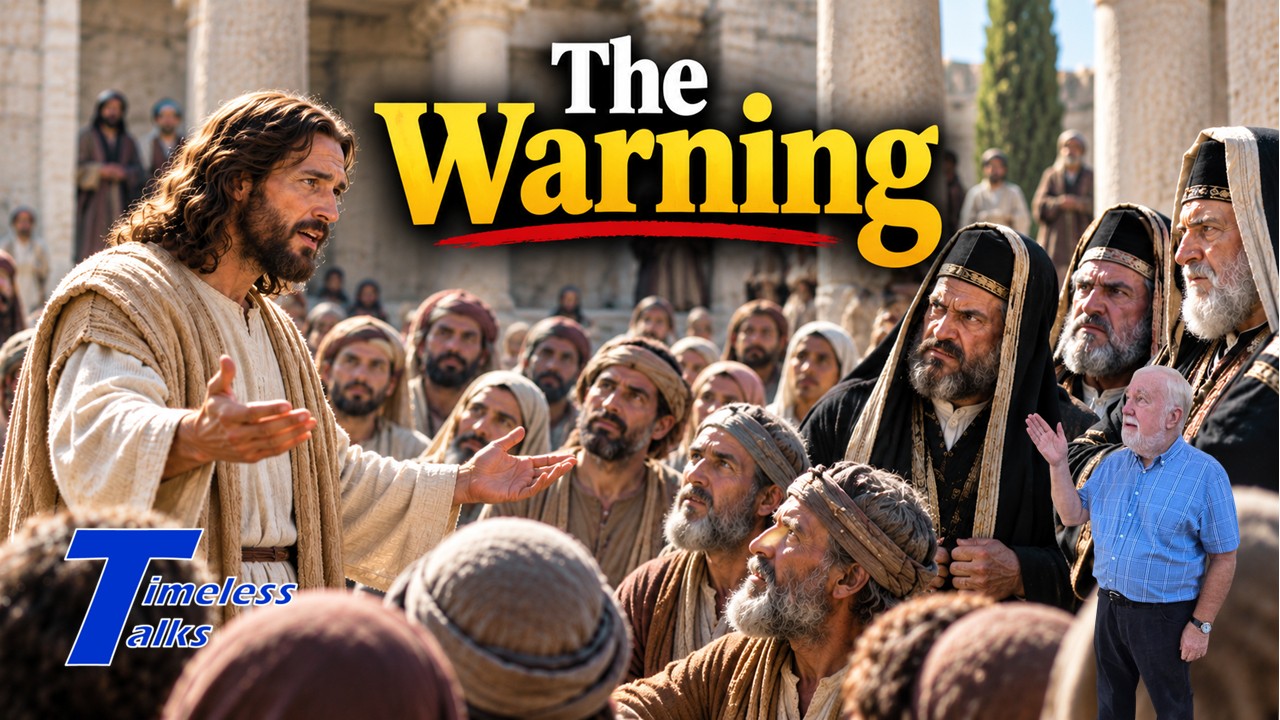
You have said it. “Stop! You will get hurt”. All caring parents do it. People warn each other. And Jesus warned some leaders, and us today, with a parable.
Intro
If you watched this video, you learned a lot about who is Lord. Is it Jesus or yourself?
It was based on Mark 11: 27-33. There, the Jewish religious authorities had challenged Jesus about his authority to clear out the Temple on Monday of the Passion Week. These leaders had, over many years, created an unusually powerful idol or god without noticing it. And because Jesus loves and cares for everyone, just like he is deeply interested in you, he loved them by warning them.
So let’s be careful. Let’s define and reveal this so-called idol. We do it by looking at the Jewish leadership and those with prominence and power.
The “authorities” cherished the opinions of the people. They lived in a culture that was either honor or shame, as we described in this video. Honor, glory, prestige, and being seen as a leader were the result of skirmishes between the Pharisees, Sadducees, Herodians, and other political-religious parties. They loved what people thought. John disclosed, “for they loved the glory that comes from man more than the glory that comes from God.” (Jhn 12:43)
And they loved the recognition given to those at the head table at a banquet. Jesus, speaking to his disciples about them on a different occasion, said, “They do all their deeds to be seen by others. For they make their phylacteries broad and their fringes long, and they love the place of honor at feasts and the best seats in the synagogues and greetings in the marketplaces and being called rabbi by others.” (Mat 23:5-7)
Do you see their idol? The man-made god was that the lower-class people, the unrighteous, the sinners would look up to them. They wanted recognition by everyone, so they wore special religious clothes everywhere they went in public. Do people today actually believe and enjoy the recognition by being dressed as someone who should be honored and called Reverend, or Father, or Bishop by what they wear in public? Do you see them as authorities on religious matters because of their clothing, or their constant overly pious demeanor? Think about it. What do even protestant preachers often wear on Sundays? Do coats and ties, plus standing behind a pulpit, make them the religious authority? Do you show them more honor because they do?
Back in Jesus’ day, these religious people worshipped their idol of prestige and public honor. And Jesus kept making it more and more difficult. They would challenge him. He would expose them. They would lose honor and be shamed. Their idol was being dishonored by Jesus. He was not cooperating and giving them glory.
At the end of Mark 11, Jesus had exposed them one more time, and they lost more honor. You see, they had rejected God’s latest prophet, John the Baptist. John delivered his message of change to everyone, including the leaders. “But when he saw many of the Pharisees and Sadducees coming to his baptism, he said to them, “You brood of vipers! Who warned you to flee from the wrath to come? Bear fruit in keeping with repentance.” (Mat 3:7-8) But the leaders did not repent. They were not baptized by John. They had rejected God’s messenger. His servant. And yes, I want you to notice the word, servant.
Now Mark 12 is continuing in the same context. Nothing changed but the chapter number.
Now the loving representative from God, Jesus, cared about these hard-headed, stubborn men. So he will do something a bit daring, trying to warn them. Just like we yell at people to STOP! A bit daring, but often needed.
He tells them a fictitious story, but it was so realistic. It used everyday events and places to reveal a hidden spiritual matter. That is what a parable is.
If you have your Bibles, follow along. Pause the video, get your Bible, and follow along. If you don’t have a Bible, send a text to this number with your name and mailing address, and we will send you one promptly.
Mark 12 begins with Jesus telling us that he was speaking to the idol-worshipping, religious establishment.
Jesus tells of a man who built an entire, complete business. The vineyard was complete with fences, towers, and a winepress. And, just like some wealthy people today, leased the business to some vine-growers and left.
When it was the right time, the right season, the owner sent a servant, did you hear that, to get some of the fruit as “rent”. But the renters had started acting like they owned the property. They were not going to pay rent. So they took the servant and beat him and sent him away without paying rent.
So the owner sent another servant and they mistreated him, too. The owner kept sending more and more servants, each one being hurt or killed. So he finally stopped sending servants, but sent his own, much-loved son. His son should be respected and honored. Instead, the renters claimed ownership of the vineyard by killing the son.
Now watch what Jesus does. He asks the religious leaders how justice would best be served. Matthew’s version says those in authority said, “… “He will put those wretches to a miserable death and let out the vineyard to other tenants who will give him the fruits in their seasons.”” (Mat 21:41) Mark’s account has the same kind of answer. Destroy the tenants and give to someone else. Isn’t that close to what we do? Hopefully, we won’t kill them, but we will evict the current renter and get a replacement who will not take ownership and will pay rent.
Are you ready for the point of the story? It is Jesus who delivers it. Jesus speaks of servants, namely God’s prophets, like John the Baptist, being rejected. He includes himself, without calling himself “God’s Son”, as being the rejected cornerstone.
Did these hard-headed, obstinate leaders get the point? “And they were seeking to arrest him but feared the people, for they perceived that he had told the parable against them. So they left him and went away.” (Mrk 12:12)
They got the point, but did you get the point?
God, the owner of the vineyard, will take anyone who rejects his messengers, who rejects his guides, who rejects his son, who has all authority, and allow them to destroy themselves.
So, what are you going to do? Are you willing to listen to God, his Son, and his apostles? Will you give him the fear and reverence he demands? Solomon said, “The end of the matter; all has been heard. Fear God and keep his commandments, for this is the whole duty of man. For God will bring every deed into judgment, with every secret thing, whether good or evil.” (Eccl 12:13-14) Later in Mark 12, Jesus says, ““And you shall love the Lord your God with all your heart and with all your soul and with all your mind and with all your strength.’ The second is this: ‘You shall love your neighbor as yourself.’ There is no other commandment greater than these.” (Mrk 12:30-31)
Do you fear God? Do you revere God in life or worship, the way he wants to be revered? He is the owner. Are you obeying his son? OR are you paying close attention to your “religious authorities”? Are you listening to a man, or to God? Are you listening to God and what he says?
Timeless Talks can help you. If you want to learn more about the Bible, we have access to a free online Bible correspondence course that you can complete at your own pace. Just use the phone and leave a voicemail, or send a text. If you are not certain as to what your needs are, again, use the phone and let us know. Or you can use the contact page over at TimelessTalks.Net for any need.